Segal Centre for Performing Arts/Off-Mirvish, Jan 15-Feb 8 2026, CAA Theatre
Full Meal Deal 🍔🥗 This is a deep dive review
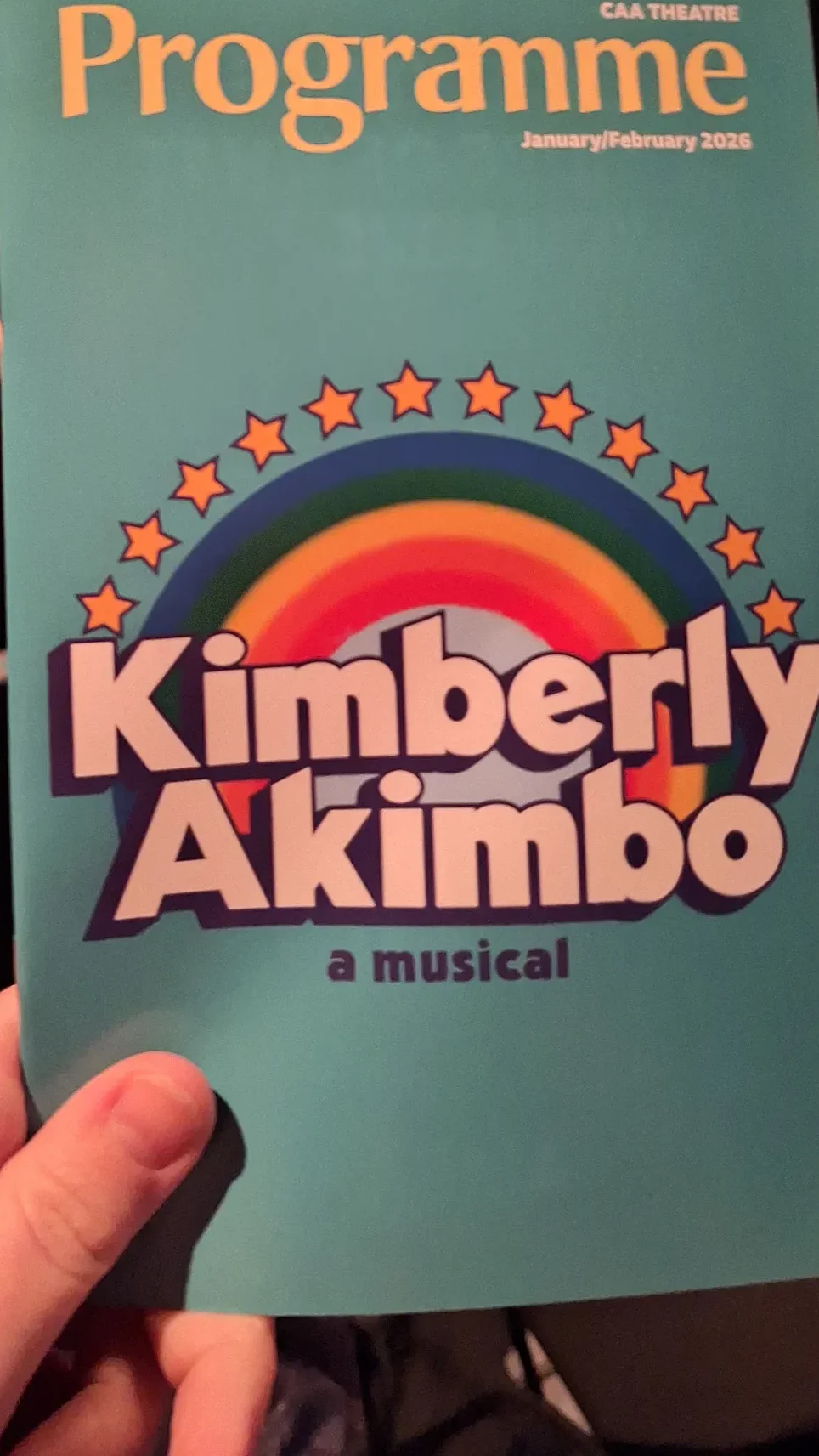
During the peak docudrama era of the 2000s-2010s, I used watched back-to-back marathons of shows like My Strange Addiction, Untold Stories of the ER, and Mystery Diagnosis. Even now, I still find myself getting sucked into watching clips of medical dramas on YouTube Shorts, wondering how did I get here?? And just a few weeks ago, I binged all of season one of The Pitt (believe the hype).
I have always been fascinated by the fragile nature of life and the human body, and how we are all affected by the medical system at some point in our lives. I think there is an urgency that I find exciting in these shows that appeals to the theatre person in me. The stakes are high, the circumstances are often unusual, and the ensemble has to work together to save lives. There are so many beautiful and awful parts about our humanity that are revealed in these shows.
I think because of this I had some preconceived ideas about what I might expect from Kimberly Akimbo, and how the story might unfold. I knew the premise was about a teenage girl with a rapid aging disease, knowing she will likely not live past the of age 16. With this type of heart-wrenching logline in mind, the show’s overall lighthearted nature was a bit surprising. The story moves slowly and sweetly, even though our protagonist Kimberly Levaco (played by the charming Louise Pitre) knows she likely has less than a year left to live. She celebrates her 16th birthday, and reflects on what she would like to do with the short amount of time she has left.
This Segal Centre/Off-Mirvish production unfortunately got off to a bit of a rocky start when I saw it. The arena scoreboard set piece that flies in from above didn’t quite make it far enough down to be fully visible. There also seemed to be some issues with the ensemble’s mics or levels; in the opening song the harmonies didn’t sound quite right. However, these issues were quickly resolved in the scenes that followed.
Besides the technical issues, I found the opening number of “Skater Planet” to be both fascinating and odd. The ice skating is an impressive bit of stagecraft; it was mesmerizing watching the actors effortlessly skate around on stage without any ice. However in the song itself, New Jersey is mentioned so many times it feels more like an SNL skit poking fun at expositional songs in musicals rather than a genuine attempt to set the scene. It actually feels like a bit of a missed comedic opportunity to break the fourth wall and let the audience in on the setup. It’s the 90’s in small town New Jersey! I’m not sure if I needed the song to explain me that this is a story about ordinary people in an ordinary town (minus the main character, who is really only extraordinary because of her condition).
I think this song captures one of my main issues with this musical, which is that many of the songs are not really necessary in order to tell the story. There is some emotional depth explored, but quite a few of the songs just describe what we are already seeing happening onstage, and don’t move the plot along. And because almost all of the characters are living in the reactionary, there is very little plot-driven or character-driven action that happens. At times I found it hard to stay engaged with the story because of this.
The show’s chorus was another conundrum for me. I was excited at first to see the use of a chorus and how they would be utilized for storytelling. The quartet is cleverly positioned as the high school’s glee club, but their main purpose ends up being to enhance the show’s song and dance numbers. I would have loved a few more individual moments of these characters to get to know them on a deeper level. Although they are onstage throughout most of the show, the characters’ story arcs and wants are fairly simple. All four are in love with each other and want to buy new costumes for the glee club. However, they discover they all have different incompatible sexualities when they are outed to each other abruptly by Aunt Debra. Everyone then quickly moves on from that moment without much further commentary. It’s a bit jarring considering the 90’s setting of the story.
I think it also makes it challenging to make the teens in Kimberly Akimbo really pop because they feel so two-dimensional. It could be the reason why Robert McQueen’s direction leaned towards bigger character bodies and voices, in an effort to add a bit more pizazz and comedy to the teen characters who don’t feel fully developed otherwise.
With this in mind, I feel a bit mixed about Thomas Winiker’s performance of Seth Weetis. Seth is the love interest of Kimberly; a sweet, nerdy teenager with a special interest in anagrams. It’s never specifically stated that the character is autistic or on the spectrum. However while watching Winiker’s performance, it seemed like that was the direction that was chosen. Although in doing some further research, it seems that Winiker is not the only performer who has portrayed Seth in this way. I always feel a bit wary when any kind of story chooses to portray an autistic character and the lived experience isn’t clear. I think it’s difficult territory to navigate in a way that’s respectful and authentic. I don’t know if Winiker identifies as being neurodivergent, and it’s very well possible he has some real life experience that he wanted to bring to his portrayal. It seemed to me however that Winiker was placing a lot of affectation on the character’s voice that I didn’t think was necessary. I would have loved to have seen him turn down the dial a bit on the character work in order to allow his authentic self to shine through. I appreciated his willingness though to make strong choices and perform all the way to the very back seats of the balcony, especially as a young performer.
Overall, I found that Kimberly Akimbo doesn’t stray too far from where it’s positioned itself as a light-hearted comedy, except for a few short dramatic moments and heartfelt ballads which I think are the most impactful of the show. Tess Benger (who I am huge fan of after seeing her in Into the Woods and Cock) plays Pattie Levaco, Kimberly’s mother; she has a beautiful solo about wanting to slow down time with her kids (“Father Time”). She has a looming fear of Kimberly’s affliction also affecting her current pregnancy, which causes her to be more focused on recording videos for her future child than taking care of herself or Kimberly. Benger’s performance is the perfect mix of kooky and neglectful; her character’s desire to be a better parent someday is clearly felt.
Wishing for a better or different future (even if you don’t have much of a future left like Kimberly) is one of the major themes of the show. In “Make a Wish”, Kimberly expresses that all she really wants from the Make-A-Wish Foundation is a normal family dinner, which is called back to later in the show (“The Inevitable Turn”). Of course, the family dysfunction causes it all to fall apart. But what I really liked lyrically is that the characters actually acknowledge that it’s predictable how it will play out; it’s one of the most devastating moments in the musical that holds some real weight to it. The family tries their hardest to be the best versions of themselves but can’t seem to break out of their old patterns no matter how much they want to. These darker family moments were some of my favourite throughout the show. Watching a terminal teenager be the caretaker of her unreliable parents is heartbreaking. And having an older actress play the teenager also adds another interesting layer; it brings to mind how children who have to take on the role of the adult in their unstable homes are forced to grow up far too quickly.
These more weighty moments however were kept fairly brief. They never let things get too heavy or dark, with characters constantly making jokes or making light of their situations. Most of the humour felt very sitcom-style which was a bit surprising, considering the dark nature of the show’s topics. Letting more of these heavy moments have a chance to breathe I think would have left me with a bigger emotional impact.
A short moment that I did find highly impactful though was “Skater Planet (Reprise)”, when the teen chorus sings about how they can’t wait for high school to be over so life can really begin. It’s a feeling I know all too well from when I graduated from my small town K-12 school. I was counting down the days until graduation, and anticipating the exciting adventures and independence of adult life. I loved how Kimberly was staged in the middle of her circle of friends and not singing along with them, knowing that her life ends with high school. It’s a beautifully heartbreaking moment. I wished this moment was called back to later when Aunt Debra tries to manipulate the kids to participate in her cheque fraud scheme. There is a real risk that if this plan goes awry, the futures of these kids will be jeopardized. Kimberly could very well spend the last moments of her life in a correctional facility. It’s surprising that this isn’t really acknowledged or at least the stakes of it taken more seriously. The overall lack of consequences for Kimberly and Seth having committed a crime feels like another overlooked dramaturgical issue.
Overall, I was left wanting to feel more connected to Kimberly and the odd bunch of characters in her world. There are only a few moments of conflict and action in the story, making it difficult to stay engaged and really want to go along on the ride with them. Choosing to lean in more to the comedy rather than the difficult moments makes it feel like the narrative is purposefully avoiding the belly of the beast. A teenager, someone’s daughter and someone’s classmate, is about to die soon, and the true weight of this impending tragedy doesn’t feel present enough throughout. Right from the beginning even, everyone and everything feels a bit removed from reality. The lighting is dark and the stage feels a bit empty at times, giving it this uncanny, eerie quality. Especially while watching the actors magically glide around on skates, it feels more like you’re watching a surreal dream play out.
I’m curious about what a hypothetical Act III for Kimberly Akimbo could look like. What would be the consequences if Kimberly’s health condition worsens while travelling the world? Especially since we don’t see any degradation of Kimberly’s health throughout the show. Would her low-income parents try to scrape enough money together to come see her before she passes? Or would that not be possible with the expenses of having a new baby to take care of? Even though Kimberly is a teenager, I think she has enough of a grasp on the dark, grim realities of life that the bubblegum world portrayed seems at odds with the story it’s trying to tell. I do appreciate the sentiment the story tries to leave its audience with though, that “no one gets a second time around, so you might as well enjoy the ride.”
Personally, I don’t think I would see this show a second time around, but it has a few moments that I think are worth watching. “Better” is the most exciting and memorable number, Debra’s high energy rock song with soulful vocals performed by Kristen Peace. It’s the showstopper where we see how people on the fringes like Aunt Debra don’t let anything stop them from getting what they want in life. And when Kimberly steps out for the first time disguised as a senior, it’s a moment that will make you gasp. It really captures the heart of the show for me, that no matter what age you are, you can choose the mindset of how you want to live your life going forward.